


Phantom Limb Pain
- Ayazhan Zhaksybayeva

- Mar 17
- 2 min read

What is Phantom Limb pain ?
Phantom Limb Pain (PLP) is when you feel pain on your amputated part of the body, for example losing a leg.
Most of the time, after losing part of your body. It feels like an illusion to feel pain in that area where there is no longer that part of your body. But the pain is real. Your brain and body is still trying to adapt to the changes.
Why does Phantom limb pain occur if the limb is gone ?
Because of changes following the amputation, the brain is still producing the sensation from the missing limb, which is why the feeling persists.
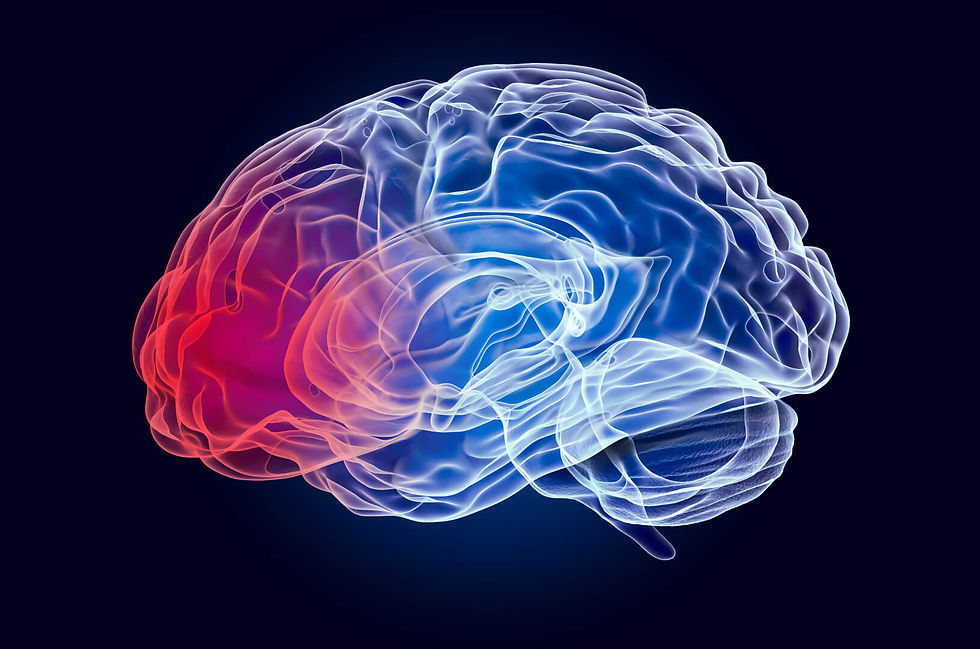
Brain Mapping - The body, including the amputated part, is still represented by the somatosensory cortex. The brain may experience pain, tingling, or the sensation of movement in the missing area once the map has been removed.

Spinal cord - The spinal cord undergoes changes, due to no pressure from the amputated limb the spinal cord becomes hypersensitive and increases the nerve pathway sensitivity. This causes the nervous system to signal the pain in a more intense way.
Peripheral nerve - The nerves that were cut during the amputation can form neuromas from the small clusters of nerves. These nerves are damaged and cause spontaneous electrical impulses and pain.
Is phantom limb pain neurological, psychological, or both?
Neurological | Changes in the central nervous system, such as cortical reorganization in the somatosensory cortex, where the brain's "map" of the missing limb stays and produces pain signals, are the main reason. The brain confuses signals as coming from the absent limb because neuroplasticity forms new neural connections. |
Psychological | Emotional factors like stress, anxiety, or distress can cause or worsen the pain in the early stages. Later after the amputation the pain is more psychological causing depression and anxiety in the late stages of amputation. |
Treatment evaluation:
Mirror therapy : A mirror is placed in front of the intact limb so the patient can see the reflection and that if the intact limb is moving the missing limb is also “moving”. It corrects the mismatch between the brain and the visual perspective. As well as helps the Somatosensory cortex to reorganize itself.
Medication : Drugs are used to target the nerve signals and the brain plasticity. (Antidepressants, Painkillers, Anticonvulsants), Many of the drugs are to ease and used for short term relief.
New tech :
VR - Stimulates a moving virtual limb, more immersive version of mirror therapy. Brain computer interface - Allows patients to control the prosthetic limbs with neural signals that may restore the sensory feedback.
Bibliography :
https://my.clevelandclinic.org/health/diseases/12092-phantom-limb-pain
https://www.ncbi.nlm.nih.gov/books/NBK448188/#:~:text=Peripheral%20Nerve%20Cha nges,Brain%20Changes
https://www.hackensackmeridianhealth.org/en/healthier-you/2022/09/28/10-ways-doc
tors-relieve-phantom-limb-pain-for-amputees


Comments