


The Biology of Memory Foundation
- Aidana Yerkebayeva

- Feb 16
- 3 min read

Memory is a fundamental biological function that shapes identity, learning and survival, providing us with the necessary tools for cognitive processing. The formation of our memories involves three main steps, encoding, consolidation and retrieval all achieved through the workings of the brain.
Types of memory:
Although memory can be categorized into many subcategories, there are ideas centered around four main types.
Sensory memory: It is extremely short-lived (meaning less than a second to a few seconds) retention of sensory information. This acts as a selective response to stimuli, allowing the process of important information.
Short-term memory: This too is a temporary storage of information, lasting typically for about 15 to 30 seconds. It allows for the quick processing of 3-7 items for example, remembering phone numbers before dialing. Historically it was cited as 7 ± 2 items (Miller’s law), but it is now reconsidered to be limited to 3-5. The information stored will then be forgotten or transferred into long-term memory.
Working memory: This memory retrieval involves temporarily manipulating and holding information while completing complex tasks like reading.
Long-term memory: This is a process whereby information is stored for a relatively long period of time; hours, days or forever. The input can be unlimited.
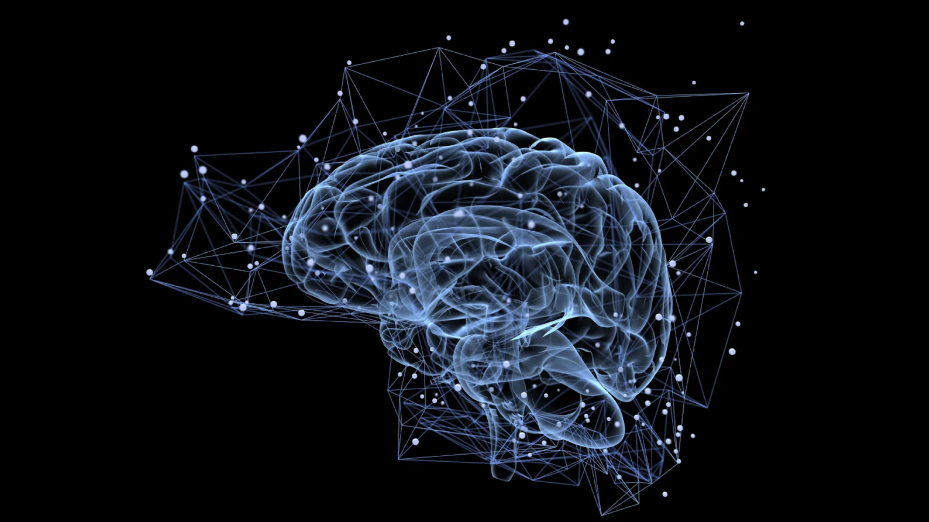
So how does this idea of formation work on a cellular basis?
This cellular basis lies in synaptic plasticity, where neurons change their connection strength in response to experience. Neurons are specialized cells of the nervous system that act as information messengers, using electrical and chemical signals to transmit information throughout the body. Consisting of a cell body, dendrites, and an axon, they form complex networks, with roughly 86 billion in the human brain, facilitating sensory input, motor control, and thought.
First described in the hippocampus, Long-Term Potentiation (LTP) is a strengthening of synapses between neurons. As a result, it causes stronger, more efficient electrical responses between neurons. This process is accepted as the underlying mechanism for the formation of memory.
On the other hand, Long-Term Depression (LTD) is a cellular mechanism that weakens these synaptic connections between neurons acting as the opposite to LTP. While the sound is rather negative, on a cellular basis, it is a critical process for memory as it involves the removal of unnecessary or old information that is no longer needed to allow the formation of new and relevant memories to form.
Moreover, memory does not only require electrical communication but also structural changes. LTP and LTD require changes in the neurons, whereby growth of new dendritic spines is stimulated. More changes in gene expression and new protein synthesis also take place in the storage and retrieval of memory.
Modulation:
To consolidate memories, there are some vital external factors that have to be achieved. For example, sleep and dopamine.
During sleep, the brain goes under the process of replaying neural activity patterns or basically your experiences. During this, the brain transports this information from the hippocampus to the neocortex for long-term storage. Therefore, this natural biological habit is not only important for fundamental bodily functions but for complex cognitive processes too. So consolidating sleep, maintains a crucial factor for proper memory formation.
Dopamine is a critical regulator for memory, especially in encoding new information and strengthening long-term memories via circuits in the hippocampus. By increasing levels of dopamine, working memory is enhanced and synapses involved in storing information (LTP) are strengthened.
Bibliography:
Hydén H (ed) (1967) The neuron. Elsevier, Amsterdam
Eccles JC (1964) The physiology of synapses. Springer, Berlin Göttingen Heidelberg New York
Zoologisches Institut, Universität Stuttgart-Hohenheim, Stuttgart, Germany Professor Dr. Hinrich Rahmann & Dr. Mathilde Rahmann - The Cellular Basis of Memory
Dopamine and adaptive memory Author links open overlay panel Daphna Shohamy, R. Alison Adcock
What Is Memory? - Kendra Cherry, MSEd
Lieke Hofmans Michael J. Frank, Roshan Cools - Striatal dopamine can enhance both fast working memory, and slow reinforcement learning, while reducing implicit effort cost sensitivity
Neurotransmitters are involved in memory aging in different ways - Dahl, M. J., Bachman, S. L., Dutt, S., Düzel, S., Bodammer, N. C., Lindenberger, U., Kühn, S., Werkle-Bergner, M., & Mather, M. (2023)
About sleep's role in memory- Bjorn Rasch , Jan Born


Comments