


The Science Behind Immunotherapy - How Our Immune System Is Helping Fight Cancer
- Anika Shetty

- Jul 9
- 3 min read
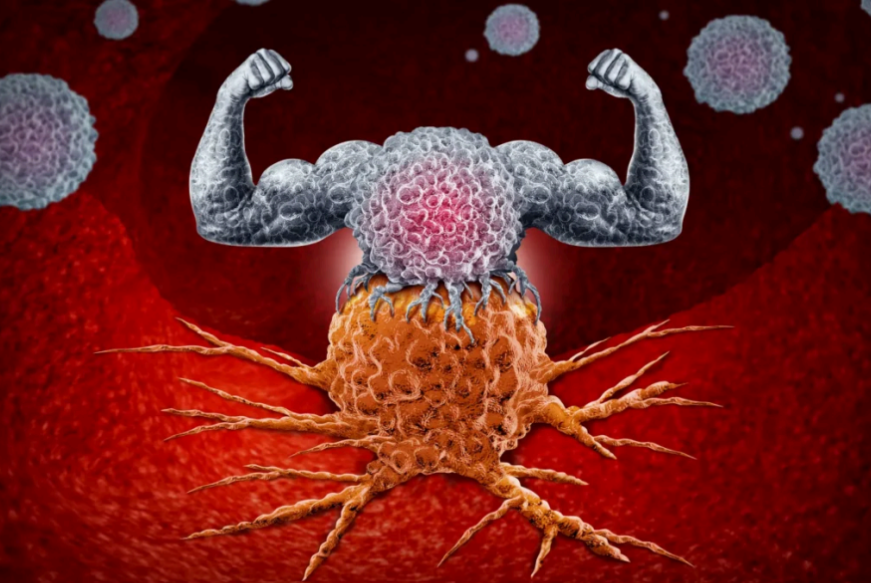
People's usual thoughts about cancer treatment is that patients are likely to go under chemotherapy or surgery. While these methods have helped save many lives, scientists have discovered another way of treatment that works in a completely different way. Rather than attacking cancer cells directly, immunotherapy allows the immune system to recognize cancer cells.
The best part about immunotherapy is that it uses one of the greatest advantages of the body. its self defense system. Instead of eliminating the immune system, immunotherapy only strengthens its role or teaches it to recognize cancer cells, which are not visible to the immune system.

How Cancer Evades the Immune System:
Cancer begins when mutations happen in the DNA of the cell, which results in its uncontrolled growth and replication. Since cancer cells develop from our own normal cells, they are often not recognized as a danger by the immune system.
As tumors grow, they become even more skilled in dodging recognition. Some of the cancer cells can produce signals that disable T cells, which are responsible for killing abnormal cells. Others create a tiny environment around the tumor that inhibits the immune reaction, hence allowing cancer cells to grow without being detected.
What Is Immunotherapy?
In contrast to chemotherapy, which kills rapidly dividing cells, immunotherapy allows the immune system to identify and fight cancer in a more efficient way. There are several types of immunotherapy available, each designed to help the immune system in its own way.
One of the most successful treatments is checkpoint inhibition therapy. Understanding our immune system reveals that our immune system has natural mechanisms known as “checkpoints” The purpose of this is acting like a brake and preventing the T-cells from attacking the normal body cells. In certain situations, cancer has the ability to use these checkpoints in a positive manner by turning on proteins such as PD-1, PD-L1, and CTLA-4 to prevent the attack of T-cells on the tumor.
Blocking the signals here allows the immune system to be set “free from the brake”. The moment these signals stop their activity, T-cells become capable of identifying and destroying cancer cells.

The Risks of Immunotherapy:
Although immunotherapy is an effective treatment, it comes with its risks. Patients should understand the fact that immunotherapy works by boosting the immune system and also sometimes causes immune cells to attack the healthy tissue along with cancerous cells.
Some patients going under the treatment may experience side effects such as skin rashes, fatigue, diarrhea, or inflammation of some organs, such as lungs, liver, or thyroid. Luckily, a patient is under constant observation by the doctor, meaning that side effects can be prevented and stopped.
Most importantly, however, immunotherapy is not a 100% effective treatment for all patients. The promising results of this kind of therapy lead scientists to believe that it can be perfected even further.
Advancements in the Field:
Immunotherapy is one of the fastest growing fields within cancer research. Scientists work on individualized vaccines for cancer, enhanced CAR-T cell therapy, and AI-enabled research tools that would help discover what method is most effective for each particular patient. Scientists also test out possible combinations of immunotherapy and chemotherapy and radiotherapy in order to gain even better results in the future.
Although immunotherapy needs further improvements, it has already changed the lives of many patients.
Conclusion:
I think that immunotherapy is a fascinating advancement in modern medicine because it shows that scientists can use knowledge on the functioning of the immune system to create ways of treating people and helping them fight cancer. Instead of relying on medications meant to kill the cancer cells, immunotherapy demonstrates that the body has its own tool against tumors.
As scientists continue discovering new things, the thought that the use of immunotherapy can help make cancer treatment unique and widely used around the world comes to mind.

Bibliography:
https://www.cancerresearchuk.org/about-cancer/treatment/targeted-cancer drugs-immunotherapy
https://www.cancerresearchuk.org/health-professional/treatment-and-other post-diagnosis-issues/immunotherapy-and-its-side-effects
https://cancerblog.mayoclinic.org/2025/02/26/what-is-cancer-immunotherap y/
https://my.clevelandclinic.org/health/diseases/21096-immunotherapy-side-e ffects


Comments