


How melatonin supplements impact sleep quality

You’re tossing and turning in your bed, attempting to get a good night’s sleep for the next day. However, your efforts are futile, as sleep refuses to come. For millions of people experiencing restlessness or even insomnia, grabbing over the counter supplements seems like a quick and easy fix. However, melatonin supplements are unique. Instead of making you fall asleep more easily, it actually changes how your mind and body communicate with each other throughout the night.

What is melatonin?
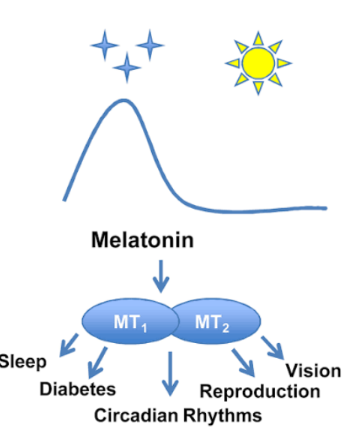
Melatonin is a hormone created by the pineal gland in our brain. It is effective in regulating the body’s circadian rhythm, or your sleep cycle. The brain makes melatonin on its own, and it typically starts to release a couple hours before bedtime.
Melatonin supplements are typically given to individuals who have a hard time falling asleep, as it signals when to sleep. Extra melatonin can help with this problem. Melatonin supplements are also created in a lab, as they are synthetically derived.
How does this supplement work?
Once you swallow a tablet or a gummy, the melatonin is released and absorbed into the bloodstream. This hormone travels around the body, including the brain. An important part of the brain is the suprachiasmatic nucleus (SCN). This is a small area in the hypothalamus, and its
role is to act as the body’s central circadian clock. The SCN is also crucial in coordinating processes that follow approximately 24 hour cycles. This includes the timing of sleep, and wakefulness.

After reaching the brain, the melatonin binds to the MT1 and MT2 receptors. These receptors have slightly different roles. The MT1 receptors are commonly associated with reducing neuronal activity in the SCN. This is the area where the body clock is controlled, and this is important, as it helps the body transition towards sleep.
The MT2 receptors help adjust the timing of the body clock, helping shift your sleep schedule earlier or later.
This leads to the brain receiving a stronger signal for it to sleep. Usually, the darkness is enough to cause the pineal gland to release melatonin. Though after taking a supplement, the extra melatonin reinforces and strengthens the idea of bedtime.
Common side effects:
While generally safe, melatonin supplements can also cause typical side effects. Such as tiredness and headaches. However, many other people go through nightmares, or intense dreams.
At higher doses, people have other side effects, this includes:
- Dizziness
- Nausea
- Vomiting
- Bedwetting
- Irritability
- Feeling disoriented
Although these side effects could arise in some people, taking melatonin supplements at a low dose is generally safe.
What Drives Melatonin Misuse and Efficacy?
People are more likely to misuse melatonin supplements by taking it at higher doses, such as 5mg to 20mg. However, this is harmful, as the body naturally makes less than 0.3mg. Moreover, some people take the supplements right at bedtime, which doesn’t give the brain enough time to process the extra melatonin.
Despite these factors, melatonin supplements could still be helpful if used correctly. It is commonly used for rhythm issues, such as jet lag or shift work, not chronic insomnia.

Looking into the future:
Melatonin supplements are now going beyond just sleep. Scientists are studying melatonin's potential antioxidant, anti-inflammatory, and neuroprotective properties. Moreover, further research explores its role in heart health, chronic pain reduction, and immune support.
Conclusion:
I think that melatonin supplements are valuable in terms of adjusting the body’s internal clock. But they are not a quick, permanent fix for poor sleep habits, because melatonin acts as a timing signal instead of a powerful sedative. This means that taking low doses at the right time is the key to melatonin working effectively.
Bibliography:
https://health.ucdavis.edu/blog/cultivating-health/melatonin-and-your-sleep-is-it-safe-what-are-th e-side-effects-and-how-does-it-work/2025/02
https://www.mayoclinic.org/drugs-supplements-melatonin/art-20363071
https://www.hopkinsmedicine.org/health/wellness-and-prevention/melatonin-for-sleep-does-it-wo rk


Comments