


Artificial Intelligience and Machine Learning in Diagnostics
- Taicia Kiuna

- Feb 2
- 4 min read
He sat anxiously in the sterile waiting room, a fluorescent light flickering above his head as the distant beeping and hurried scuffles of nurses stumbling around echoed down the hallway. An hour had passed, then another, and another until the nurse finally called out what sounded like his last name and ushered him into a cramped office. The doctor - who unbeknownst to the man was already on the 14th hour of his shift with dark circles etched into his face - flicked through his file scanning the pages with detached efficiency. Moments later, the man was sent out of the office with the same impassive advice: sleep more, exercise and drink water.
A month later, he was rushed into the emergency room in critical condition. A life-threatening heart condition, missed while it was still treatable, hadn’t been discovered until it was too late.
Unfortunately, cases like these are all too common with over 3 million preventable deaths occurring every year (WHO, 2023). Overworked medical staff and occult medical conditions often allow early-stage diseases to go undetected. Doctors are human, so mistakes are inevitable. However, clinicians working 12+ hour shifts are especially vulnerable: the decision-making centre of the brain, the prefrontal cortex, is impaired by fatigue
(Agyapong-Opoku et al., 2025) and the responsibility of diagnosing over 50 patients per shift significantly increases the risk of errors.
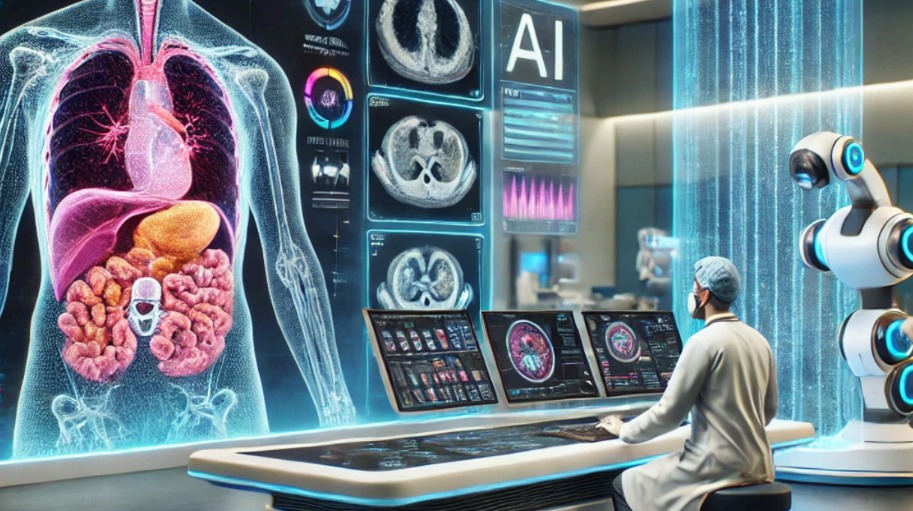
Now imagine yourself in that same doctor’s office, but now your diagnosis is assisted by an artificial intelligence (AI) or machine learning (ML) system. Recently, sophisticated AI systems have outperformed humans in certain tasks due to their higher processing speed, data handling capacity and pattern recognition ability. They can efficiently and objectively analyse symptoms, test results and imaging data against medical databases, even identifying subtle patterns often missed by clinicians (Zachariadis & Leligou, 2024; Sabri et al., 2025). As a result, diagnostic accuracy and early detection of conditions such as cancer or heart disease is significantly improved (Zhou et al., 2025), helping clinicians make faster and more informed medical decisions.
Beyond diagnostics, AI and ML are also transforming personalised treatment planning. They can recommend patient-specific treatment and predict how they may react to medication or procedures by considering their history, genetics and clinical data (Alsanosi & Padmanabhan, 2024) reducing the trial-and-error approaches commonly used. Automating routine tasks such as chart review, lab result interpretation and patient monitoring enhances the workflow of hospitals by freeing clinicians of the administrative burden, allowing them to focus on critical decision making and patient care (Zota et al., 2025; Varnosfaderani & Forouzanfar, 2024).
Machine learning systems continuously update with new data, keeping decisions aligned with the latest research and health trends. Predictive models can even identify high-risk patients before symptoms appear, enabling preventative care and early intervention (Dinc & Ardic, 2025). Additionally, AI tools widen access to expert level diagnostics in remote or underdeveloped areas through telemedicine (Yuvraj, 2025).
While promising, they come with limitations. Risks include: bias with training data, required human oversight and concerns around data privacy and regulation (Chustecki, 2024; Pham, 2025; Zhang & Zhang, 2023). Clinicians must ensure that AI recommendations are interpreted correctly and ethically - ensuring patient safety. Despite these challenges, AI and ML are revolutionising patient healthcare and enhancing accuracy while serving as a tool to support, not replace, human clinicians.
Bibliography:
Agyapong-Opoku, F., Agyapong-Opoku, N. and Agyapong, B. (2025) ‘Examining the effects of sleep deprivation on decision-making: a scoping review’, Behavioral Sciences, 15(6), 823.
Alsanosi, S.M. and Padmanabhan, S. (2024) ‘Potential applications of artificial intelligence (AI) in managing polypharmacy in Saudi Arabia: a narrative review’, Healthcare, 12(7), 788.
Chustecki, M. (2024) ‘Benefits and risks of AI in health care: narrative review’, Interactive Journal of Medical Research, 13, e53616.
Dinc, R. and Ardic, N. (2025) ‘The next frontiers in preventive and personalised healthcare: artificial intelligence-powered solutions’, Journal of Preventive Medicine and Public Health, 58(5), pp. 441–452.
Pham, T. (2025) ‘Ethical and legal considerations in healthcare AI: innovation and policy for safe and fair use’, Royal Society Open Science, 12(5), 241873.
Sabri, O., Al-Shargabi, B. and Abuarqoub, A. (2025) ‘The role of artificial intelligence in improving diagnostic accuracy in medical imaging: a review’, Computers, Materials & Continua, 85(2), pp. 2443–2486.
Varnosfaderani, S.M. and Forouzanfar, M. (2024) ‘The role of AI in hospitals and clinics: transforming healthcare in the 21st century’, Bioengineering, 11(4), 337.
World Health Organization (WHO) (2023) ‘Patient safety’, Available at: https://www.who.int/news-room/fact-sheets/detail/patient-safety (Accessed: 13 January 2026).
Yuvraj (2025) ‘Telehealth AI virtual consultations patient triage care’, Hospital & Healthcare Management. Available at: https://www.hhmglobal.com/knowledge-bank/techno-trends/telehealth-and-ai-enhancing-routine care-deliver (Accessed: 13 January 2026).
Zachariadis, C.B. and Leligou, H.C. (2024) ‘Harnessing artificial intelligence for automated diagnosis’, Information, 15(6), 311.
Zhang, J. and Zhang, Z. (2023) ‘Ethics and governance of trustworthy medical artificial intelligence’, BMC Medical Informatics and Decision Making, 23(1), 7.
Zhou, J., Park, S., Dong, S., Tang, X. and Wei, X. (2025) ‘Artificial intelligence-driven transformative applications in disease diagnosis technology’, Medical Review, 5(5), pp. 353–377.
Zota, R.D., Cîmpeanu, I.A. and Lungu, M.A. (2025) ‘Exploring AI in healthcare systems: a study of medical applications and a proposal for a smart clinical assistant’, Electronics, 14(18), 3727.


Comments